In today's dynamic world, managing your finances has become a skill that's more crucial than ever. Building a budget serves as a foundation for making informed financial decisions and steering your

Dated: August 10 2023
Views: 209
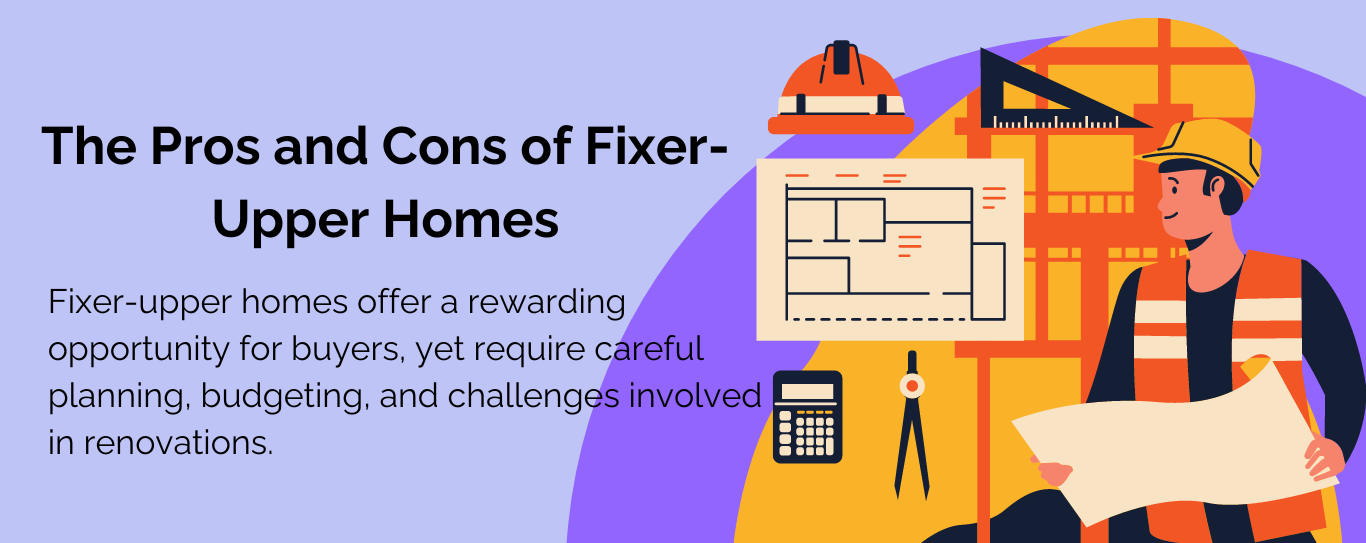
The Pros and Cons of Fixer-Upper Homes: Your Comprehensive Guide
House hunting can be an exciting adventure, and among the options, fixer-upper homes stand out as unique opportunities for prospective buyers. A fixer-upper is a property that requires renovation and repairs, presenting both challenges and potential rewards. They are so appealing because of the idea of an incredible return on investment (ROI). In this comprehensive guide, we will delve into the pros and cons of fixer-upper homes, equipping you with the knowledge needed to make an informed decision before taking on a renovation project.
· Lower Purchase Price: One of the most significant advantages of fixer-upper homes is their potential for a lower purchase price compared to move-in-ready properties. By investing in a property that needs work, you can acquire it at a more affordable price, providing you with extra flexibility in your budget.
· Customization Opportunities: Fixer-uppers offer a blank canvas for customization. You have the freedom to personalize the design, layout, and finishes to create a home that perfectly suits your taste and lifestyle.
· Build Sweat Equity: Renovating a fixer-upper can be a rewarding journey of "sweat equity." As you invest time and effort into the improvements, the value of your property can appreciate, potentially yielding a significant return on investment if you decide to sell later.
· Opportunity to Negotiate: Negotiating the price of a fixer-upper home can be more flexible compared to move-in-ready properties. With the right negotiation skills and a thorough understanding of the property's condition, you may be able to secure a better deal.
· Location Potential: Fixer-upper homes may be available in sought-after locations where move-in-ready properties are scarce or expensive. Investing in a fixer-upper in a desirable neighborhood can lead to long-term property value appreciation.
Cons of Fixer-Upper Homes:
· Higher Renovation Costs: While the initial purchase price may be lower, renovation costs can quickly add up. It is crucial to conduct a detailed assessment of the property's condition and accurately estimate expenses to budget effectively for the renovations.
· Time and Effort: Renovating a fixer-upper demands a significant investment of time and effort. If you have a tight schedule or lack experience with renovations, it may not be the right choice for you.
· Potential for Hidden Issues: Older homes, especially fixer-uppers, may have hidden structural or foundational issues that could be costly to fix. It is essential to conduct thorough inspections and possibly consult with a qualified contractor to uncover any potential problems.
· Temporary Living Discomfort: Living in a construction zone can be inconvenient and uncomfortable. Depending on the extent of the renovations, you might need to find temporary housing during the major construction phases.
· financing Challenges: Securing financing for fixer-upper homes can be more complex than for move-in-ready properties. Seller financing can always be a good option if offered because traditional lenders may be hesitant to provide loans for properties that need extensive repairs. Exploring specialized renovation loans or working with a mortgage broker might be necessary.
Key Considerations Before Taking on a Fixer-Upper:
Thorough Inspection: Before committing to a fixer-upper, invest in a comprehensive inspection. A professional inspection will help identify existing issues, allowing you to assess the extent of the renovations required.
Budgeting and Contingency Planning: Create a detailed budget for the renovation project, including the cost of materials, labor, permits, and any unexpected expenses. Build in a contingency fund to account for unforeseen challenges that may arise during the renovation process. You could also include a contingency to back out of the purchase if something happens.
Renovation Skills and Experience: Assess your DIY capabilities and renovation experience. Be honest about your skill level and determine whether you can handle certain aspects of the renovation yourself or if you will need to hire professionals.
Time Commitment: Consider the time commitment required for the renovation. If you have other responsibilities or a demanding schedule, be realistic about how much time you can dedicate to the project.
Realistic Expectations: Set realistic expectations for the renovation. Understand that the process may take longer than anticipated and that unexpected setbacks can occur.
Creating a Renovation Plan:
Priority List: Develop a priority list for the renovation. Determine which aspects of the home require immediate attention and which improvements can be postponed.
Estimates and Quotes: Obtain estimates and quotes from contractors and suppliers for the various renovation tasks. This will help you refine your budget and make informed decisions about the project.
Permits and Regulations: Familiarize yourself with local building codes and regulations. Ensure you obtain the necessary permits for the renovations to avoid potential legal issues.
Eco-Friendly Upgrades: Consider incorporating eco-friendly upgrades into your renovation plan. Energy-efficient features can not only benefit the environment but also reduce long-term utility costs.
Keep Historical Charm: If your fixer-upper is a historical property, try to preserve its original charm and architectural features. Emphasizing the historical elements can enhance the property's appeal.
The Renovation Process:
Start with Structural Repairs: Begin with essential structural repairs to ensure the safety and integrity of the property.
Address Plumbing and Electrical: Plumbing and electrical systems are critical for the functionality of the home. Make sure they are up to code and in good working condition.
Focus on High-Impact Areas: Concentrate on renovating high-impact areas like the kitchen and bathrooms, as they can significantly increase the value and appeal of the home.
Consider Open-Concept Layouts: Many buyers prefer open-concept living spaces. If feasible, explore options to create a more open and spacious layout.
Quality Finishes: Invest in quality finishes that will withstand the test of time. Quality materials can add value to your home and reduce maintenance costs in the long run.
Selling or Renting the Fixer-Upper:
Market Research: Before selling or renting the property, conduct market research to understand the demand for homes in the area and the potential return on investment. This will help you know whether you should flip or hold the property.
Professional Staging: Consider professional staging to showcase the home's potential and help potential buyers or renters envision themselves living in the space.
Real Estate Agent: If selling the property, enlist the services of an experienced real estate agent. They can help market the property effectively and negotiate on your behalf.
Rental Property Management: If renting the property, you may opt to hire a property management company to handle tenant screening, rent collection, and property maintenance.
Conclusion: Fixer-upper homes offer a unique opportunity for homebuyers seeking a customizable living space and the potential for significant financial gains through sweat equity. However, they also come with challenges such as higher renovation costs, time commitments, and potential hidden issues. Before taking on a fixer-upper, conduct thorough research, create a comprehensive renovation plan, and realistically assess your skills and resources.
Remember that renovating a fixer-upper requires patience, perseverance, and a well-thought-out strategy. By weighing the pros and cons, conducting due diligence, and approaching the renovation process with careful planning, you can turn a diamond in the rough into your dream home and a wise investment for the future.
Click here to start looking for your fixer upper.

Logan Moffett is a Real Estate Agent for Remax Associates based in Pleasant Grove Utah. Logan Graduated with his degree in Spanish with a minor in Business Management from Brigham Young University. Or....
In today's dynamic world, managing your finances has become a skill that's more crucial than ever. Building a budget serves as a foundation for making informed financial decisions and steering your
For most Americans, the age-old belief has been that purchasing a home to live in is a sound investment, offering a sense of security and the prospect of building equity over time. However, the
The Pros and Cons of Fixer-Upper Homes: Your Comprehensive GuideHouse hunting can be an exciting adventure, and among the options, fixer-upper homes stand out as unique opportunities for prospective
So, you're thinking about selling your home? It's a big decision, no doubt. Whether you're upgrading to a larger property, relocating for work, or downsizing after retirement, the process of
 Wasatch Front Regional MLS - Salt Lake Board of REALTORS® All information deemed reliable but not guaranteed. All properties are subject to prior sale, change or withdrawal. Neither listing broker(s) or information provider(s) shall be responsible for any typographical errors, misinformation, misprints and shall be held totally harmless. Listing(s) information is provided for consumer's personal, non-commercial use and may not be used for any purpose other than to identify prospective properties
consumers may be interested in purchasing. The data relating to real estate for sale on this website comes in part from the Internet Data Exchange program of the Multiple Listing Service. Real estate listings held by brokerage firms other than Moffett Group Real Estate may be marked with the Internet Data Exchange logo and detailed information about those properties will include the name of the listing broker(s) when required by the MLS. Copyright ©2026 All rights reserved.
Last Updated: September 23, 2026 5:18 PM UTC
Show More...
Wasatch Front Regional MLS - Salt Lake Board of REALTORS® All information deemed reliable but not guaranteed. All properties are subject to prior sale, change or withdrawal. Neither listing broker(s) or information provider(s) shall be responsible for any typographical errors, misinformation, misprints and shall be held totally harmless. Listing(s) information is provided for consumer's personal, non-commercial use and may not be used for any purpose other than to identify prospective properties
consumers may be interested in purchasing. The data relating to real estate for sale on this website comes in part from the Internet Data Exchange program of the Multiple Listing Service. Real estate listings held by brokerage firms other than Moffett Group Real Estate may be marked with the Internet Data Exchange logo and detailed information about those properties will include the name of the listing broker(s) when required by the MLS. Copyright ©2026 All rights reserved.
Last Updated: September 23, 2026 5:18 PM UTC
Show More...
